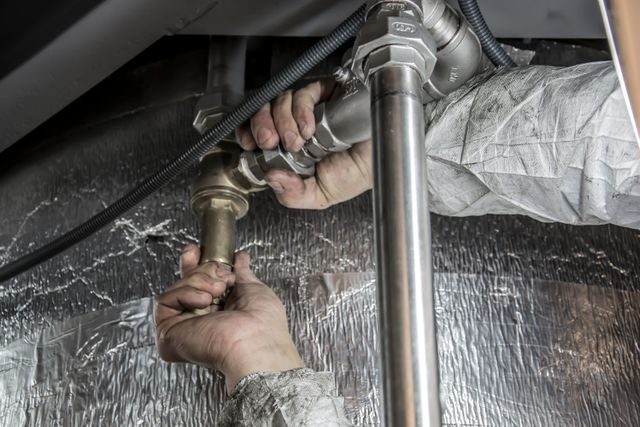
Start by narrowing it down
Low water pressure is frustrating, but it is often one of the easier plumbing problems to diagnose. The most useful first question is simple: is the pressure low at one tap, at the hot water only, or everywhere in the home?
The answer points you towards very different causes. A weak flow at a single basin is usually a small part at the tap. Weak flow everywhere may be a valve in your unit or a supply issue outside it. This article walks through the checks in order, from the simplest to the ones that need a plumber. For other plumbing warning signs, the plumbing guide explains how to compare companies and what to ask.
One tap or the whole home
Walk around the home and run each tap and shower in turn, cold first and then hot.
- One tap or shower only: the cause is almost always at that fitting or the pipe just before it.
- Hot water only, at every outlet: look at the water heater and its valves.
- Every tap, hot and cold: check your main valve, then ask whether neighbours are affected too.
- Pressure that comes and goes: note the times. A drop at busy hours can point to a building supply issue rather than a problem in your unit.
Write down what you find. It saves time later, whether you fix it yourself or call someone.
Aerators and shower heads
The aerator is the small mesh insert at the tip of most tap spouts. Over time it collects grit and mineral deposits, which can reduce flow noticeably.
Unscrew the aerator by hand or with a cloth wrapped around it, rinse out any debris and soak it in vinegar if it is scaled. Shower heads can be treated the same way: unscrew the head, clear the small holes with a soft brush and soak it to loosen scale. If a hand-held shower is weak, check the hose for kinks or a split lining as well.
If cleaning makes no difference, the problem is further back in the tap or the pipe.
Mixer cartridges and tap parts
Many modern mixer taps use a cartridge that controls both flow and temperature. A worn or blocked cartridge can reduce flow, make it hard to get a steady temperature, or let only hot or only cold water through. Older taps with separate handles may have a worn washer or headgear that restricts flow.
Replacing a cartridge involves closing the water supply, taking the tap apart and finding the matching part, which varies by brand and model. If you are not comfortable with that, or the tap is old and worn, replacement may make more sense than repair. The tap replacement guide explains what affects the job and what to ask a plumber.
NEXT STEP
See when repair or replacement makes sense and how to compare plumbing companies.
Read the tap replacement guideThe water heater outlet
If the cold water is fine but the hot water is weak at every outlet, the water heater is the likely cause. Storage heaters can build up sediment that restricts the outlet, and the valves on the inlet and outlet pipes may be partly closed or faulty. Instant heaters need enough incoming flow to work properly, and a blocked filter or a failing flow sensor can cut the flow.
Do not open the heater or adjust parts inside it. Check that the valves on the heater's pipes are fully open, and if the flow is still weak, have a plumber look at it. The water heater guide covers what to expect from a repair or replacement.
Valves that are partly closed
Every home has a main valve, and many fittings have their own small isolation valves. After a repair, a renovation or a water supply interruption, a valve may have been left partly closed without anyone noticing.
- Check that the main valve to your unit is fully open.
- Check the isolation valves under basins, behind toilets and on the pipes to the water heater and washing machine.
- Turn each valve gently. Do not force a stiff valve, since it may break.
If a valve is stiff, corroded or leaks when you turn it, leave it and ask a plumber to replace it.
When the cause is outside your unit
If every tap is weak and neighbours notice the same, the cause is likely outside your home. It may be a building pump, a supply pipe in a common area or planned maintenance. For HDB estates, contact your Town Council; for condominiums, contact the management office. They can tell you whether there is a known issue and when it will be fixed.
Check notice boards and messages from your Town Council or management office first, since supply work is often announced in advance.
When to call a plumber
Call a plumber when cleaning the aerator and checking valves does not help, when a cartridge or tap needs replacing and you would rather not do it yourself, or when the low pressure is limited to your unit and you cannot find the cause. A plumber can check the pipes inside the home for blockages, corrosion or a hidden leak that is draining flow.
For work on the water supply pipes, PUB's requirements for plumbing works explain which work must be carried out by a licensed plumber. Ask the company whether your job falls into that category.
When you call, describe which outlets are affected, whether it is hot, cold or both, and what you have already checked.
NEXT STEP
Area pages list the plumbing companies that name your town on their own websites.
See plumbers serving TampinesQuestions
Why is the water pressure low at only one tap?
Usually because of a blocked aerator, a worn mixer cartridge or washer, or a partly closed isolation valve under that fitting. Clean the aerator first, then check the valve, and call a plumber if neither helps.
Why is only my hot water pressure low?
The water heater is the likely cause. Check that the valves on its pipes are fully open. If the flow is still weak, switch the heater off at its isolator and have a plumber check it.
Who should I contact if every unit in my block has low pressure?
Contact your Town Council for HDB estates or the management office for condominiums. A problem affecting several units is likely in a shared supply or pump rather than inside your home.
Prices come only from the sourced company rates in the HomezyPro directory, shown with each company and capture date.