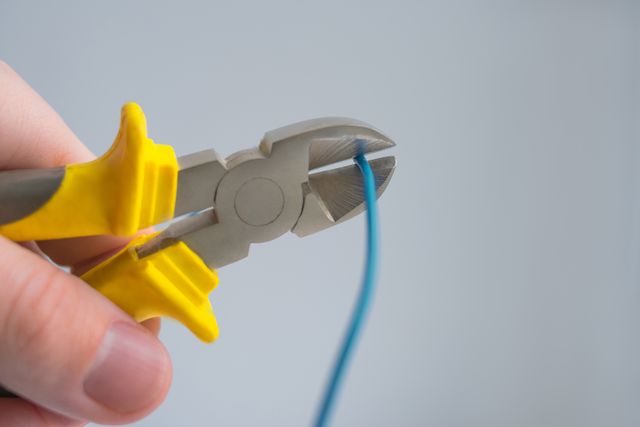
Home fire safety checklist
The Singapore Civil Defence Force (SCDF) publishes a Household Fire Safety Checklist in its Civil Defence Emergency Handbook. Walk through your flat and answer yes or no to each point below.
- Controlled Goods such as 3-pin plugs, multiway adaptors and portable socket outlets carry the SAFETY Mark.
- Outlets are used within their safe capacity, without overloading.
- Wires are in good condition and laid in the open, with none running under rugs or through door openings.
- Heat-generating appliances such as a toaster sit away from flammable materials.
- Cooking appliances are clean and in good working condition.
- Flammable liquids are kept away from heat.
- Candles and oil lamps stand on a stable surface.
- Matches, lighters and sparklers are kept away from heat sources and children.
- The liquefied petroleum gas (LPG) cylinder is in a well-ventilated area and its hose is in good condition.
- The common corridor is free of discarded items.
- You have at least one dry chemical powder fire extinguisher at home.
- Everyone at home knows to dial 995 in a fire.
SCDF's handbook says that if you answered No to any question, you should rectify it as soon as possible. Many fixes are quick: unplug a crowded adaptor, move a toaster away from the curtains or take old boxes out of the corridor.
Electrical checks
Sockets and wires are a good place to start with fire safety at home. SCDF's handbook says to check for frayed wires and exposed wiring and have them replaced immediately, not to overload electrical outlets, and to switch off appliances when they are not in use. It also says not to leave batteries or devices to charge unattended for an extended period of time or overnight.
The Consumer Product Safety Office (CPSO) lists 33 categories of household electrical, electronic and gas appliances and accessories as Controlled Goods, which must carry the SAFETY Mark before they can be sold in Singapore. Each mark has a unique 8-digit registration number, and an appliance with a 3-pin plug carries two marks: one on the appliance and one on the plug. CPSO says you can enter the model number or the 8-digit number in its Register of Registered Controlled Goods to check that the mark has not expired and the product details match.
For more on sockets and wiring, see our home electrical safety checklist. If you charge an e-scooter or another personal mobility device (PMD) at home, read our guide to PMD battery fire safety too.
Kitchen checks
SCDF's handbook says not to leave cooking unattended and not to place curtains or combustible materials near stoves. Keep the stove, cooker hood and oven clean and free of grease, and keep cooking oil and other combustibles away from the stove.
For a kitchen fire, SCDF's leaflet says to cover the cookware with a lid or a wet cloth, turn off the gas supply and avoid pouring water into the cookware. Call 995 if the fire goes out of control.
Grease builds up on the hood and around the hob over time, so a regular deep clean helps. Our kitchen deep clean checklist can help you plan one.
Alarms, extinguishers and escape
A Home Fire Alarm Device (HFAD) is an automatic smoke or heat detector that sounds an alarm to give early warning of a fire. SCDF's HFAD page says a smoke detector gives earlier warning than a heat detector and is recommended for homes, and it recommends HFADs with a built-in battery with a 10-year life span. Our home fire alarm guide has more detail.
SCDF's handbook recommends that each household keep at least one dry chemical powder fire extinguisher certified by a Certification Body accredited by the Singapore Accreditation Council. To use one, remember P.A.S.S.: pull out the safety pin, aim the nozzle at the base of the fire, squeeze the lever and sweep the fire with the discharge. If the fire is small, put it out; otherwise alert others, dial 995 and activate the nearest fire alarm. There are also 2kg dry powder extinguishers at the lift lobbies of every two HDB blocks. See fire extinguishers at home for more.
The main door is part of HDB fire safety too. HDB says the main entrance door is a fire safety barrier and its door closer is a self-closing safety device that must not be removed. Replace the closer if fluid leaks from it and the door cannot shut on its own.
NEXT STEP
See electrical companies in the directory with their published prices, the areas they say they cover and their sources.
Compare electriciansOutside your door
SCDF's leaflet says to keep a clear corridor passageway of at least 1.2m and to avoid discarding items along corridors, lift lobbies, escape passageways and staircases. It says to call the Town Council for removal of bulky objects. Do not throw lighted cigarette butts into the rubbish chute; if there is a chute fire, SCDF says to pour water down the chute until there is no more smoke.
Our guide to HDB corridor rules has more on keeping the space outside your flat clear. If your check turned up frayed wires, an overloaded point or a worn socket, you can compare electricians in the directory. The price depends on the job, so ask each company what its quote includes.
Questions
How often should I do a home fire safety check?
As a practical habit, do one whenever something changes at home, such as a new appliance, a renovation or a new device to charge. SCDF's handbook asks you to take 5 minutes to check your home, so it is easy to repeat. Fix anything you answer No to as soon as possible.
Is there an online home fire safety check?
Yes. SCDF's handbook points to its online Home Fire Safety Checker. You can also use the checklist on this page, which follows SCDF's household questions. Either way, put right anything you answer No to as soon as possible, and make sure everyone at home knows to dial 995.
How much LPG can I keep at home?
Up to 30kg for domestic use. SCDF's handbook sets a maximum of 30kg of LPG, which is 2 x 15kg cylinders, within a private dwelling for domestic use. Keep the cylinder in a well-ventilated area and check that its hose is in good condition.
Where should a smoke alarm go?
On the ceiling along an escape route. SCDF's handbook gives examples such as the living room, internal corridors or staircase entrances, and says more alarms can go in bedrooms. As a practical order, start with one on the escape route, then add more in bedrooms if you wish.
What should I do with old extinguishers?
Ask the manufacturer or supplier how to dispose of them. SCDF's handbook says not to dispose of extinguishers in the rubbish chute or bin. SCDF lists authorised dealers and servicing workshops on its website and is not linked to any distributor that sells fire extinguishers door to door.
Should I keep a fire blanket in the kitchen?
Yes. SCDF's handbook says it is advisable for each household to keep at least one fire blanket certified to the latest BS EN 1869 standard, for small household fires such as electrical and kitchen fires. As a practical step, store it where you can reach it quickly while cooking.
Practical guidance for planning a home job in Singapore. Company prices come from the HomezyPro directory, each linked to its source; rules and safety points link to the agency or manufacturer that sets them. This is not a site inspection, a quote or professional advice for your home.
How HomezyPro worksYOUR NEXT STEP
Find the right team for your home.
Compare services, published prices and sourced reviews. Contact the company directly to confirm your job and availability.
Explore electrician companies