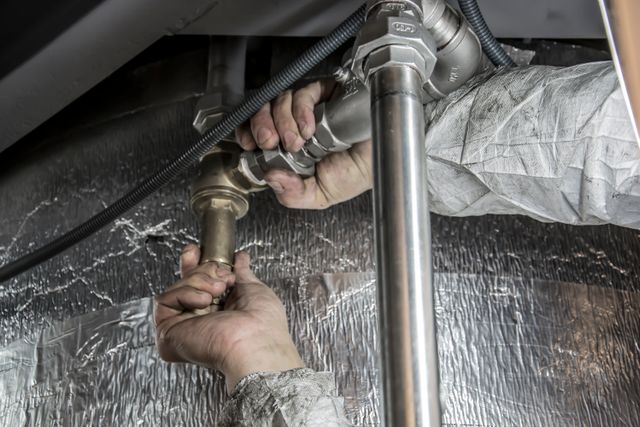
Washing machine installation, step by step
A washing machine is connected in three places: the inlet hose on a water tap, the drain hose in an outlet or floor trap, and the plug in a power socket.
- Remove the transit bolts. Take them out the way the maker's manual says. A machine run with the bolts still in can shake hard during the spin.
- Place and level the machine. Stand it on a firm, level floor and adjust the feet until it sits steady and does not rock.
- Connect the inlet hose. Screw the inlet hose onto the washing machine tap, hand-tight plus the extra turn the manual gives.
- Fit the drain hose. Run the drain hose into the outlet or floor trap without kinks, so water can flow out freely.
- Open the tap and check. Open the tap and look for drips at both ends of the inlet hose. If a joint drips, close the tap and refit the hose before you try again.
- Run an empty rinse cycle. Plug the machine in and run a rinse cycle with no clothes inside. Watch the hose joints and the drain hose while it fills and drains.
The tap, the hose and the outlet
PUB lets a handyman carry out a list of simple plumbing works. Three items on PUB's Plumbing Works page matter for a washing machine: replacing or removing any tap or mixer; replacing or removing a connecting hose to a washing machine or dish washer; and installing, replacing or removing any pipe conveying sullage water into a floor trap. In practice, a handyman may swap the tap and the inlet hose.
Other water pipe work is different. Regulated water service and sanitary plumbing works must be done by a PUB Licensed Plumber, and new or moved water pipes are not on the simple works list. Repairing or replacing any other water pipe, concealed or exposed, is not on it either. Since 2018 it has been an offence to engage a plumber not licensed by PUB for regulated works, as PUB's rules on plumbing works explain.
The drain hose ends in the washing machine outlet or a floor trap. Check that the hose sits in it without kinks before the first drain cycle. If water drains slowly or backs up once the machine is in use, read our guide to a washing machine drain choke.
Power and water near the machine
Plug the machine straight into its own socket, not an adaptor or extension, and keep the plug and socket dry. This is practical advice, not a rule from any agency.
If there is no socket near the spot, do not solve it with an extension. The Energy Market Authority (EMA) treats adding, extending or replacing power points as electrical work for a Licensed Electrical Worker (LEW). EMA says electrical work in an HDB flat needs a Licensed Electrician, the class of LEW approved for loads of up to 45kVA. The details are on EMA's page on engaging licensed workers. Our page on socket installation explains what the job involves.
Water efficiency labels
PUB rates household clothes washing machines under its Mandatory Water Efficiency Labelling Scheme (MWELS). Machines get 2 to 4 ticks per washload, and 4 ticks means 6 litres per kg of wash load or less. Only fittings of 2 ticks and above are allowed for supply and installation, as PUB's labelling requirements state.
Household dishwashers are covered by the same mandatory scheme, rated 1 to 4 ticks per place setting. PUB's guidebook for the scheme says every dishwasher offered, displayed or advertised for sale and supply in Singapore must carry the label. If you are fitting one too, see our guide to dishwasher installation.
The Climate Friendly Households Programme (CFHP) lists 4-tick washing machines among its eligible products. If you plan to use the programme, check its eligible products list before you buy.
When to call a plumber
Call a licensed plumber if:
- There is no tap for the machine where you want it to stand.
- The tap or stop valve still leaks after you close it.
- Water backs up at the floor trap when the machine drains.
- You want the machine moved to a new spot.
Our guide to what needs a licensed plumber explains which jobs need one, and you can find licensed plumbers in the directory. The price depends on the job, so compare several plumbing companies before you choose.
NEXT STEP
See plumbing companies in the directory with their published prices, the areas they say they cover and their sources.
Compare plumbersQuestions
Can a handyman install a washing machine?
Often, yes. PUB's Plumbing Works page lists replacing or removing any tap or mixer, and replacing or removing a connecting hose to a washing machine or dish washer, as simple plumbing works a handyman may do. New or moved water pipes need a PUB Licensed Plumber.
Do I need a plumber to change a washing machine tap?
No, a handyman may do it. Replacing or removing any tap or mixer is on PUB's list of simple plumbing works, as its Plumbing Works page shows. If the water pipe behind the tap needs repairing or replacing, or you want a new pipe to bring a tap to a new spot, that work needs a PUB Licensed Plumber.
Where should the drain hose go?
Into the outlet or floor trap meant for the machine. Run it without kinks so water drains freely, and fit it the way the maker's manual shows. If water backs up at the floor trap when the machine drains, stop the cycle and call a licensed plumber.
Why does my washing machine shake during the spin?
Transit bolts left in place or uneven feet are the two things to check first. Make sure every transit bolt is out, as the maker's manual says, then adjust the feet until the machine sits firm on a level floor. If it still shakes, follow the manual's guidance or contact the maker.
Will the shop take my old washing machine away?
Yes, if you ask. Under the Resource Sustainability Act, the retailer that delivers a regulated product such as a washing machine must take away your old appliance of the same type for free on request, as the Climate Friendly Households Programme page notes.
How many ticks should a washing machine have?
At least 2, because only fittings of 2 ticks and above are allowed for supply and installation under PUB's labelling requirements. Washing machines are rated 2 to 4 ticks per washload, and 4 ticks means 6 litres per kg of wash load or less. Machines with 4 ticks are on the Climate Friendly Households Programme eligible list.
Practical guidance for planning a home job in Singapore. Company prices come from the HomezyPro directory, each linked to its source; rules and safety points link to the agency or manufacturer that sets them. This is not a site inspection, a quote or professional advice for your home.
How HomezyPro worksYOUR NEXT STEP
Find the right team for your home.
Compare services, published prices and sourced reviews. Contact the company directly to confirm your job and availability.
Explore plumbing companies