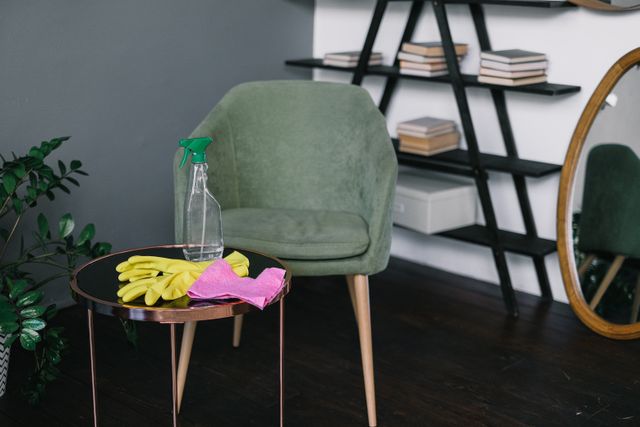
Safe products and ventilation
NEA's guidelines for cleaning and disinfecting homes say to prepare and apply disinfectants according to the manufacturer's guidelines, allow the stated contact time and use the protective equipment the product's Safety Data Sheet prescribes. NEA notes that household bleach (sodium hypochlorite) is the most widely used disinfectant and lists hypochlorites as fungicidal. Dilute bleach only as its label directs, and follow a mould remover's own instructions rather than a mix you read about elsewhere.
NEA also recommends ventilating your home, especially during and after cleaning and disinfection, to reduce the concentration of disinfection products in the air. Open the bathroom window and door before you start, and run a fan if you have one.
How to remove mould in the bathroom: tiles and grout
Use these steps for mould on wall and floor tiles and for black mould on grout. NEA advises cleaning bathrooms from high to low (wall to floor) and from cleaner to dirtier areas, such as the shower before the toilet bowl.
- Ventilate the room. Open the window and door, and switch on a fan if you have one.
- Protect your hands and eyes. Wear gloves, plus eye protection if the label or Safety Data Sheet calls for it.
- Scrub off loose mould. Use a stiff brush with detergent and water on tiles and grout lines, rinsing the brush often.
- Apply the mould remover. Use a mould remover or diluted household bleach exactly as the label directs, working from high to low.
- Leave it for the contact time. Wait as long as the label states, and do not add another product while you wait.
- Rinse and dry. Rinse with clean water, then wipe or squeegee the surface dry.
Grout or silicone: when cleaning is not enough
Look closely at the silicone sealant along the shower tray, bathtub and basin. Spots on the surface may clear with the steps above. If the mould is inside the silicone and still shows after cleaning, the sealant usually needs to be cut out and replaced. Grout that stays stained after a careful clean may need regrouting rather than stronger products.
Questions to ask a handyman:
- Does the silicone need replacing, or will another clean do?
- Would regrouting part of the wall or floor deal with the staining?
Preventing regrowth
Mould returns where surfaces stay damp, so dry the bathroom quickly after every shower. NEA's guidance on improving ventilation says people at home can improve ventilation by opening doors and windows, and use fans to promote air circulation when needed.
Habits that help:
- Squeegee or wipe wet tiles, screens and the floor after showering.
- For shower curtain mould, wash the curtain as its care label says and let it dry fully before rehanging it.
- Fix dripping taps and leaking pipes promptly.
Some mould comes from a leak rather than shower steam. HDB says untreated ceiling leaks may cause mould growth and that neighbours should address a leak promptly. If the patches are overhead, see our guide to mould on the ceiling, and for habits that help prevent leaks and chokes, read our article on bathroom maintenance.
When mould points to a leak
Mould that keeps returning on the ceiling under the upstairs bathroom, or on a wall next to a shower or toilet, can mean water is getting in. For walls beside wet areas, ask a plumber to check for a leak and compare leak repair services.
For ceilings in an HDB flat, HDB explains that ceiling leaks happen when water from the flat above seeps through the floor slab, usually from wear and tear of the waterproof membrane and screed. Flat owners are responsible for the upkeep of their own flats, including the floor and ceiling slabs. For a leak between two flats, HDB's process is:
- Talk to your upstairs neighbour.
- Agree on a time for a check.
- Engage a contractor jointly.
- Let the contractor confirm the source and recommend a repair method.
- Split the cost.
HDB says you negotiate price and scope with the contractor yourself. Repair methods it describes include re-screeding, which it recommends, and localised repair at the floor waste grating. Clean off any remaining mould once the leak is fixed.
NEXT STEP
See home cleaning companies with their published prices, the areas they say they cover and their sources.
Compare cleaning companiesWhen to stop and call a professional
Get help when:
- The mould covers a large area, such as much of a wall or the ceiling.
- It returns soon after a careful clean.
- You see signs of a leak, such as damp patches or dripping from above.
- Someone at home has breathing problems.
People with asthma or allergies may be more sensitive to mould. If you have health concerns, see a doctor.
For widespread mould, book a professional deep cleaning and ask whether mould treatment on tiles, grout and ceilings is included. If a leak is the cause, arrange a leak check first, or the mould may come back. Cost depends on the job, so look at home cleaning prices and ask what each quote covers.
Questions
Is bleach or vinegar better for bathroom mould?
NEA lists household bleach (sodium hypochlorite) as the most widely used disinfectant and describes hypochlorites as fungicidal. This guide does not rely on vinegar to kill mould. Whichever product you use, follow its label for dilution and contact time, ventilate the room and never mix bleach with other cleaners, especially acid-based or ammonia cleaners.
Why does black mould keep coming back on my grout?
Mould usually returns when grout stays damp. Lingering steam, wet walls and leaks all keep it going. Ventilate during and after showers, wipe or squeegee the walls and get any leak checked. If the grout stays stained after cleaning, ask a handyman about regrouting.
Can I remove mould from silicone sealant?
Mould on the surface of silicone can be cleaned like tiles: ventilate, scrub, apply a mould remover as the label says, rinse and dry. If dark spots remain inside the silicone afterwards, the sealant usually needs to be cut out and replaced. A handyman can remove the old sealant and reseal the joint.
How do I clean mould off a shower curtain?
Check the care label and wash the curtain the way it says. Let it dry fully before you hang it back up. After each shower, spread the curtain out along the rail so the folds can dry instead of staying bunched and damp.
Is bathroom mould dangerous to health?
People with asthma or allergies may be more sensitive to mould, so it makes sense to deal with it promptly and keep the bathroom ventilated. If someone at home has breathing problems, consider a professional clean rather than doing it yourself. If you have health concerns, see a doctor.
Should I worry about mould on the bathroom ceiling?
Check the cause as well as cleaning it. HDB says ceiling leaks typically occur in toilets and bathrooms when water from the flat above seeps through the floor slab, and untreated leaks may cause mould growth. If the patch is damp, stained or keeps returning, talk to your upstairs neighbour and arrange a check.
Practical guidance for planning a home job in Singapore. Company prices come from the HomezyPro directory, each linked to its source; rules and safety points link to the agency or manufacturer that sets them. This is not a site inspection, a quote or professional advice for your home.
How HomezyPro worksYOUR NEXT STEP
Find the right team for your home.
Compare services, published prices and sourced reviews. Contact the company directly to confirm your job and availability.
Explore home cleaning companies