Is tap water safe to drink in Singapore?
Yes. PUB's water quality page says Singapore's tap water quality is well within the Food Safety and Security (Non-Packaged Drinking Water) Regulations 2025 and the World Health Organisation (WHO) Guidelines for Drinking-water Quality. PUB also says the tap water is suitable for drinking directly from the tap without any further filtration.
In everyday terms, you can fill a glass from the kitchen tap and drink it as it is. A filter is a personal choice, not a requirement.
That answer covers the water as it is supplied. On the way to your glass, the water also runs through the pipes and fittings in your building and your home, and sometimes through a water tank or a storage water heater. That last stretch is what the rest of this guide covers: what can go wrong inside a home, what to do about it and who may fix it.
How PUB checks it
PUB runs a sampling and monitoring programme from source to tap. It takes samples from reservoirs, waterworks and desalination plants, and from the distribution system, then tests them at its Water Quality Laboratory. PUB says it carries out close to 500,000 tests a year, while online sensors monitor each stage of treatment in real time.
Put simply, the checks on tap water in Singapore follow the water from its source, through treatment, to the pipes that deliver it. Lab tests on samples sit alongside sensors that watch treatment as it happens.
At home, you are often the first to notice a change in colour, cloudiness or taste. The sections below explain what to look for. For more general questions, see our water supply FAQ.
When the problem is inside your home
Drinking water is normally clear, but PUB's drinking water FAQs say it may very occasionally look discoloured or contain particles. Maintenance can cause this, such as routine cleaning of water tanks, flushing of service pipes in buildings and testing of fire hydrants. So can fittings inside homes: corrosion in a storage type hot water heater at the end of its service life or from quality issues, corroded service pipes and fittings, and stagnant water after infrequent use, such as when you return from a holiday.
If you are worried about old pipes, water quality at the tap is the first clue. PUB suggests checking the source: discoloured water only from a single appliance, or only from the hot water taps or showers, could indicate a faulty hot water heater or appliance. See brown or discoloured tap water for more.
To clear it, PUB says to run the taps and flush any water tanks inside your premises until the water runs clear, and to avoid using the water for laundry or other purposes meanwhile. If it has not cleared after 10 to 15 minutes, call 1800-CALL-PUB.
If the cause is within your premises, such as a faulty or corroded water tank, PUB advises repairing or replacing the appliances or pipes. It also advises flushing service pipes or a water heater whose water has been stagnant for a long time before you use the water, especially for drinking.
Filters, cloudy water and pink stains
Since PUB's water quality page says no further filtration is needed, a filter at home is optional. If you use one, keep it clean: PUB's FAQs say filters may become a breeding ground for bacteria if they are not cleaned or replaced regularly. Brown deposits on a filter come from minute amounts of minerals in the water.
Milky or cloudy water can be caused by dissolved air. PUB says the tiny bubbles disappear after a few minutes and the water is still safe. If the cloudiness persists, call 1800-CALL-PUB.
Pink stains on toilet bowls, sink drains and tiles are a different matter. PUB says they are typically caused by the naturally occurring bacteria Serratia, which come from the environment and not from the water, and that they do not pose health concerns. Regular cleaning and keeping surfaces dry help control them. While you are cleaning, see how to remove bathroom mould as well.
Pipes and fittings in your home
PUB's water fittings page says no water fitting, including pipes, pipe fittings, valves, tanks, taps and mixers, can be supplied, displayed, offered or advertised for use in water service installations in Singapore unless it has been tested to PUB's Stipulation of Standards and Requirements for Water Fittings.
For service pipes, PUB advises corrosion resistant materials. It also advises replacing appliances such as a storage heater at signs of corrosion or once they pass the service life the supplier states. If you are choosing new pipes, see how PPR (polypropylene random copolymer) or copper pipes compare.
NEXT STEP
See plumbing companies in the directory with their published prices, the areas they say they cover and their sources.
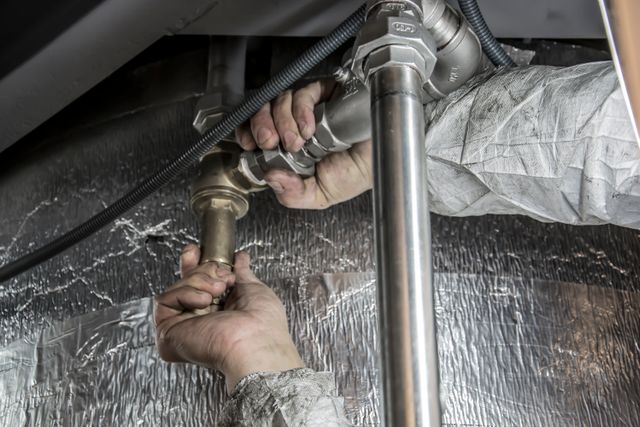
Compare plumbersPUB's Plumbing Works page says regulated water service and sanitary plumbing works must be done by PUB Licensed Plumbers, except the simple plumbing works a handyman may do. On the water side, the only pipe items a handyman may replace or remove are any pipe between a stop valve and an instantaneous water heater, and any flexible hose. Repairing or replacing any other water pipe, concealed or exposed, or a storage water heater's pipework is PUB Licensed Plumber work. Since 2018, it has been an offence to engage a plumber not licensed by PUB for regulated works.
For a leaking or corroded pipe, start with leak repair or browse plumbers. The price depends on the job; see plumbing costs.
Questions
Do I need to boil tap water in Singapore?
No. PUB says Singapore's tap water is suitable for drinking directly from the tap without any further filtration. One practical habit is still worth keeping: if the water has been sitting in your pipes for a long time, run the cold tap until it is clear before you drink.
Is water from the hot tap safe to drink?
Use the cold tap for drinking instead. PUB lists corrosion in a storage type hot water heater as one cause of discoloured water, and says discoloured water only from the hot water taps or showers could indicate a faulty heater. For a hot drink, heat cold tap water in a kettle.
Why is fluoride added to tap water?
To prevent dental cavities. PUB says fluoride is added as a Ministry of Health requirement for this purpose, and the level is kept below the regulatory maximum. If you have questions about fluoride and your own teeth, ask your dentist.
Is NEWater safe to drink if it reaches my tap?
Yes. PUB describes NEWater as high-grade recycled water that is ultra-clean and safe to drink, purified with advanced membrane technologies and ultra-violet disinfection. For questions about the water supplied to your own home, call 1800-CALL-PUB.
Should I run the tap in the morning before drinking?
Yes, as a simple habit, and it matters most when water has sat unused for a long time. PUB advises flushing service pipes or a water heater whose water has been stagnant for a long time before using it, especially for drinking. After a holiday, run the cold tap until the water is clear.
Who do I call if my tap water tastes odd?
PUB. Call its 24-hour Call Centre on 1800-2255-782 (1800-CALL-PUB), which is toll-free, though airtime charges apply to mobile calls to 1800 lines. For non-urgent issues on water supply, PUB also has an online feedback form.
Practical guidance for planning a home job in Singapore. Company prices come from the HomezyPro directory, each linked to its source; rules and safety points link to the agency or manufacturer that sets them. This is not a site inspection, a quote or professional advice for your home.
How HomezyPro worksYOUR NEXT STEP
Find the right team for your home.
Compare services, published prices and sourced reviews. Contact the company directly to confirm your job and availability.
Explore plumbing companies